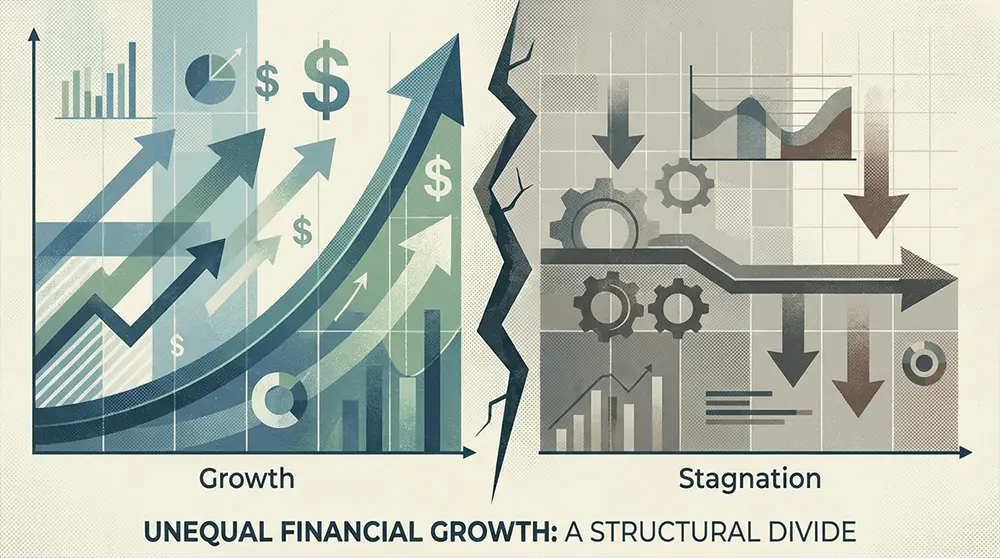
Financial inequality continues to widen, according to recent economic research, and analysts increasingly view this trend as a structural risk rather than a purely social concern. Disparities in income, wealth, and access to financial instruments are becoming more pronounced across both developed and emerging economies.
Research indicates that households with access to diversified financial assets benefit disproportionately from higher interest rates and asset appreciation. Meanwhile, lower-income groups face rising living costs and limited opportunities to protect purchasing power.
Financial literacy plays a compounding role. Individuals with greater financial knowledge are better equipped to manage debt, invest prudently, and adapt to changing conditions. Those without access to financial education remain more vulnerable to inflation and economic shocks.
From a macroeconomic perspective, rising inequality can weaken long-term growth by constraining consumption and reducing the effectiveness of monetary policy. Financial institutions increasingly incorporate inequality indicators into stress testing and long-term risk assessments.
Researchers warn that ignoring inequality may undermine financial stability itself, as concentrated wealth limits the transmission mechanisms through which economic growth benefits broader populations.